
Monsoon Sale! Let Confidence Rain with 6% Off. Code: MONSOON6

7 Answers That Instantly Kill Your Chances
💡 The biggest interview killer isn’t lack of talent - it’s lack of awareness in your answers. They fail because of one careless sentence - a response that instantly signals immaturity, defensiveness or lack of self‑awareness. The worst part? These mistakes are predictable and avoidable. In this article, I break down 7 common interview answers that quietly sabotage your chances, explain why they send the wrong signal and show you how to reframe them into credibility‑building responses. 👉 If you’ve ever wondered why interviews slip away despite solid preparation, this is the guide you need before your next one.
Ujwal Surampalli - 09 Jun 2026
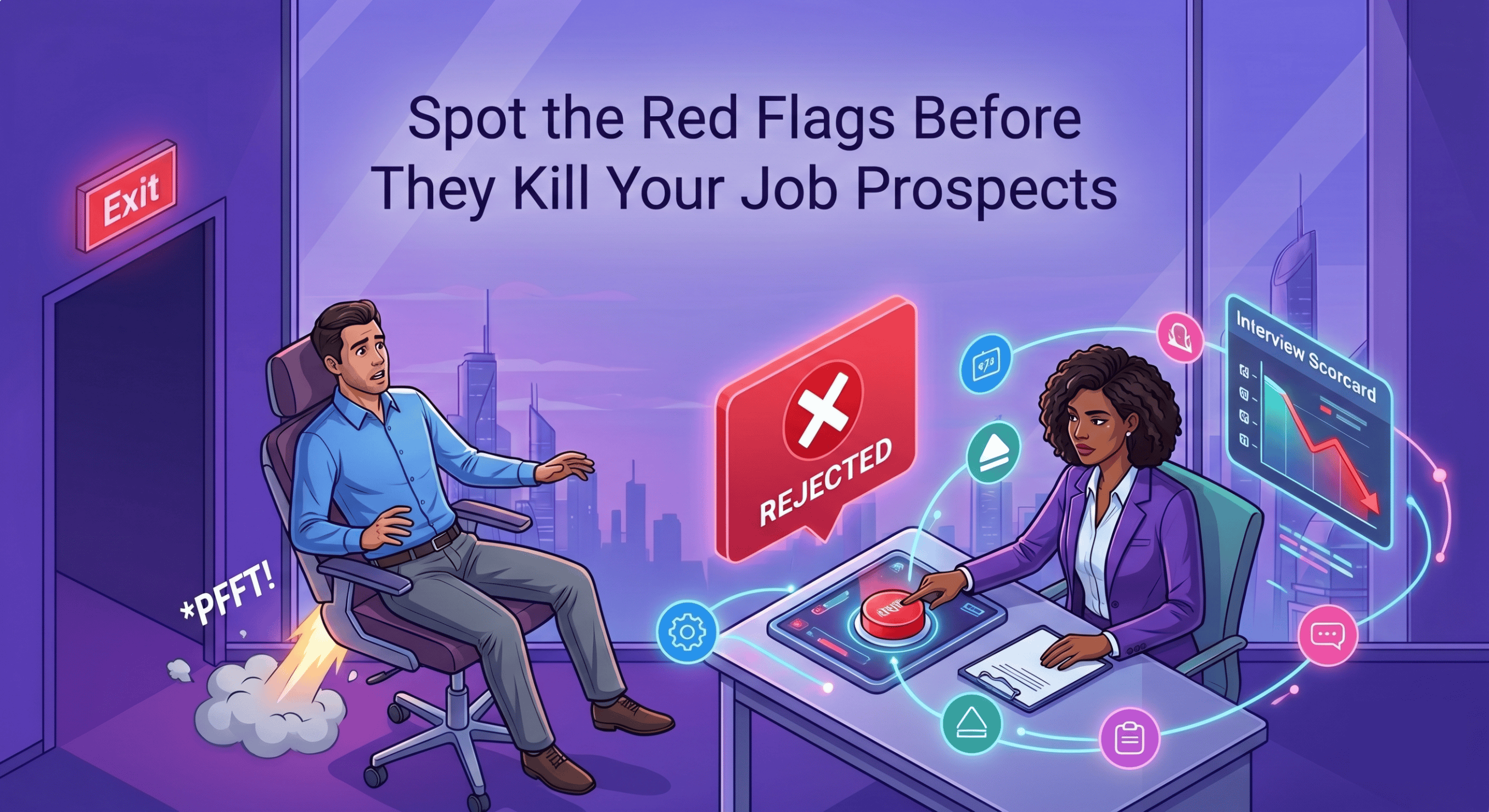
Most candidates don’t lose interviews because they lack knowledge.
They lose them because of one sentence.
One poorly framed answer.
One careless response.
One moment of avoidable immaturity.
And the frustrating part? These mistakes are predictable.
Here are seven answers that quietly and sometimes instantly damage your chances.
1. “I don’t have any weaknesses.”
This answer doesn’t signal confidence.
It signals lack of self-awareness.
Every professional has areas they’re working on. When you claim you don’t, it suggests either you haven’t reflected enough or you’re unwilling to be honest.
Interviewers aren’t looking for perfection.
They’re looking for maturity.
A thoughtful weakness, paired with what you’re doing to improve, builds credibility. Denial doesn’t.
2. “It wasn’t my fault.”
When discussing challenges or failures, this phrase is dangerous.
Even if circumstances were unfair, shifting blame immediately raises concerns.
Work environments are collaborative. Accountability matters.
Interviewers want to know: when things go wrong, do you take ownership or do you defend yourself first?
A strong candidate explains context, accepts their role, and focuses on what they learned.
Defensiveness closes doors quickly.
3. “I just need a job.”
Honesty is appreciated. Desperation is not.
When candidates say this, it signals lack of direction.
Companies want to hire people who chose the role—not people who are settling for it.
Even if you urgently need employment, frame your motivation around growth, alignment, and contribution.
Purpose sounds stronger than urgency.
4. “I don’t have any questions.”
This one surprises many candidates.
When the interviewer asks, “Do you have any questions for us?” and the answer is no, it creates a pause.
Curiosity reflects engagement.
If you haven’t thought about team culture, success metrics, expectations, or growth opportunities, it can appear as surface-level interest.
A thoughtful question shows you’re evaluating the opportunity seriously.
Silence suggests you’re just hoping to be selected.
5. “That’s on my resume.”
If an interviewer asks you to elaborate on something and you respond with this, it feels dismissive.
They’ve read your resume.
They’re asking for depth.
Interviews are conversations, not document reviews.
The moment you appear impatient or unwilling to expand, rapport weakens.
And rapport matters more than most candidates realise.
6. “I don’t know.”
This isn’t always wrong.
But the way it’s delivered makes the difference.
A flat “I don’t know” without effort suggests you give up easily.
A stronger response sounds like this:
“I’m not certain, but here’s how I would approach it…”
Interviewers assess thinking ability, not just stored knowledge.
Demonstrating reasoning, even without a perfect answer, keeps you in the game.
Shutting down ends momentum.
7. “I work better alone.”
Independence is valuable.
But in most roles, collaboration is essential.
When candidates strongly emphasise working alone without acknowledging teamwork, it raises concerns about adaptability.
Employers hire contributors—not isolated performers.
Balance matters.
The Real Pattern Behind These Answers
None of these responses fail because they are technically wrong.
They fail because of what they signal.
- Lack of self-awareness
- Lack of accountability
- Lack of curiosity
- Lack of adaptability
Interviews are rarely about catching you out.
They’re about assessing readiness.
And readiness shows in tone, framing, and ownership.
Before your next interview, don’t just prepare what you’ll say.
Be conscious of what your answers imply.
Because sometimes, it’s not the complex questions that eliminate candidates.
It’s the simple responses delivered carelessly that close the door.
Recent blog posts
Thu, 05 Mar 2026
I’ve Seen 1,000+ Interviews. These Answers Kill Your Chances (and What To Say Instead)
Let me be honest with you interviews don’t fall apart because candidates say something stupid. They fall apart because candidates say something normal.
Thu, 05 Mar 2026
Tiny Habits Win Interviews More Than Your Resume
Resumes get you shortlisted. Tiny habits decide whether you get selected.
Thu, 05 Mar 2026
Why “Good Fit” Doesn’t Help in Interviews
This note explains the thinking behind the article “Stop Calling Yourself a ‘Good Fit’” and shows how its claims line up with how interviews actually work in real hiring environments. The article isn’t trying to make an academic argument. It’s capturing a pattern that shows up again and again in interviews and that pattern is well supported by hiring research and employer surveys.





of U&U Connoisseurs (I) Private Limited
Quick Links
Free illustrations from Streamline
 +91 8500 99 0101